Saharan rock art
Sahara had enjoyed a humid climate called Hypsithermal. Starting 6,000 years ago, it lasted for thousands of years. After the Hypsithermal, desertification prevented humans from living. Instead trade routes ran between the Mediterranean Sea and the inland areas.
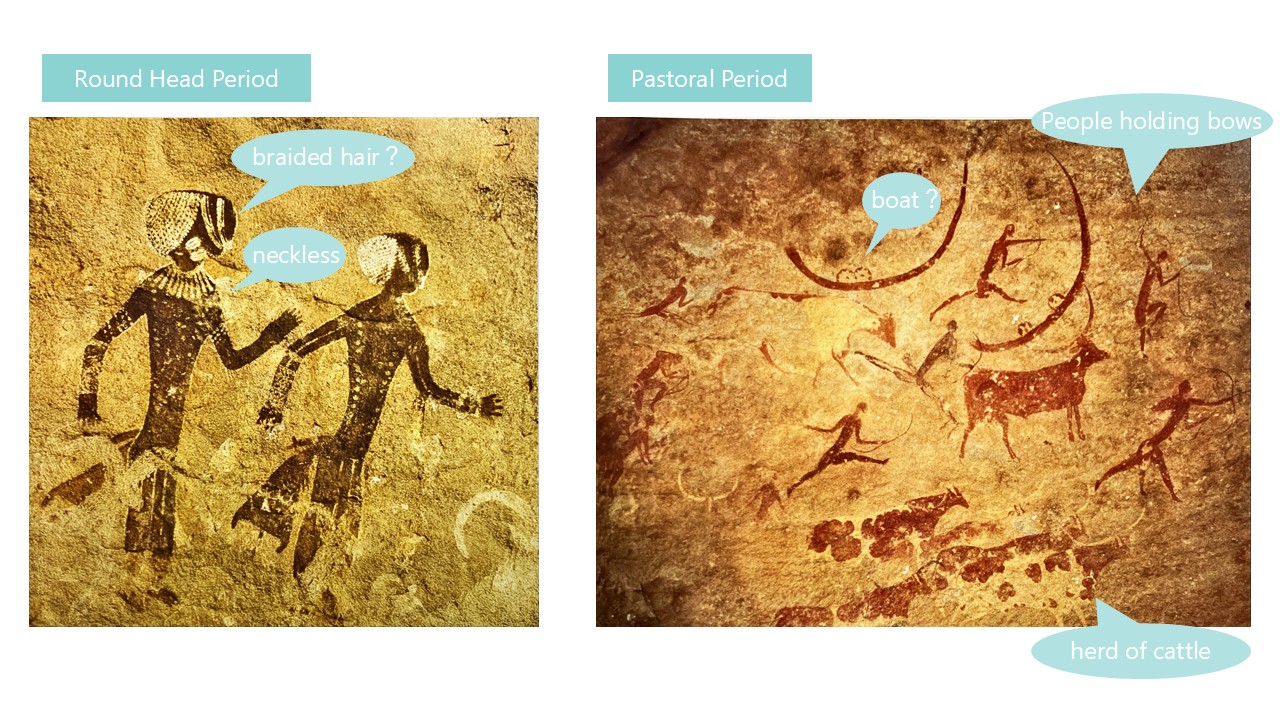
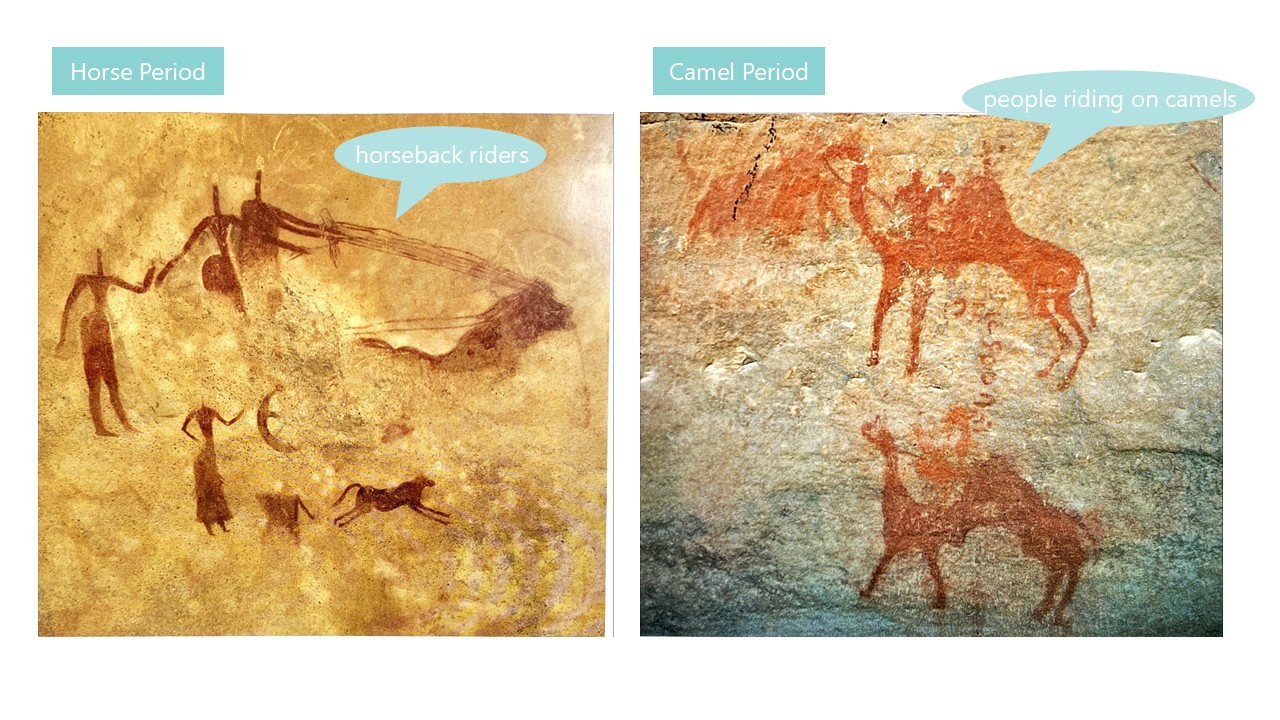
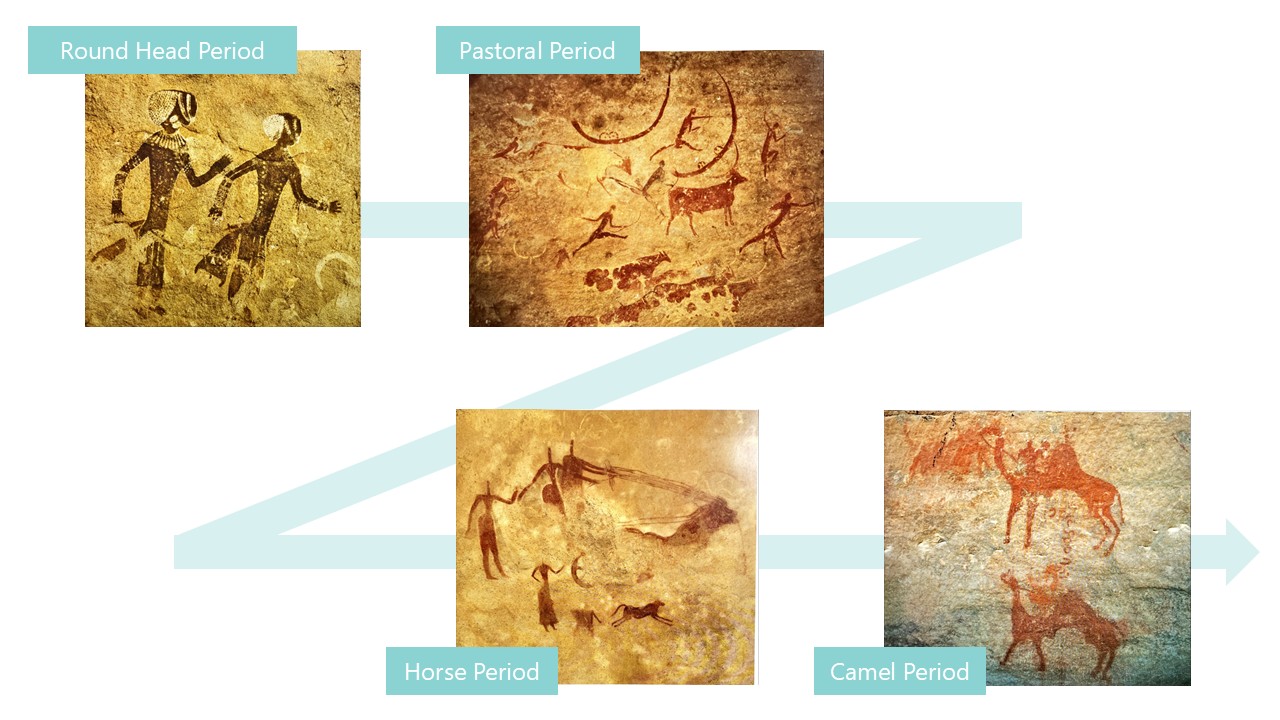
The rock carvings and paintings help us to know how ancient people lived and what kind of animals inhabited Sahara. Those of Tassili n'Ajjer are well-researched in particular. Saharan rock art after the Hypsithermal can be classified into 4 periods.
A mild climate brought a better environment for wildlife. People moved to Sahara in search of food. This stage is unique in depicting humans with round heads(the Round Head Period).
Sahara had received enough precipitation and abounded in plants. This change made it possible to raise livestock like cattle(the Pastoral Period).
As the Hypsithermal passed, human beings left Sahara. They began to ride horses or chariots to move across trade roads(the Horse Period).
Increased desertification allowed only camels as mobility(the Camel Period). Human figures had changed significantly in distinction from the Round Head Period.